

OUTDOOR FIREPLACES:
Wood-Burning vs. Gas
h1
Which is Right for Your Valley City, OH Backyard?
When designing your dream backyard, one of the first major decisions you will face is choosing the right fuel source for your outdoor fireplace. Should you opt for the crackle and nostalgic aroma of a traditional wood-burning fireplace, or the instant, effortless luxury of a gas-powered custom fire feature?
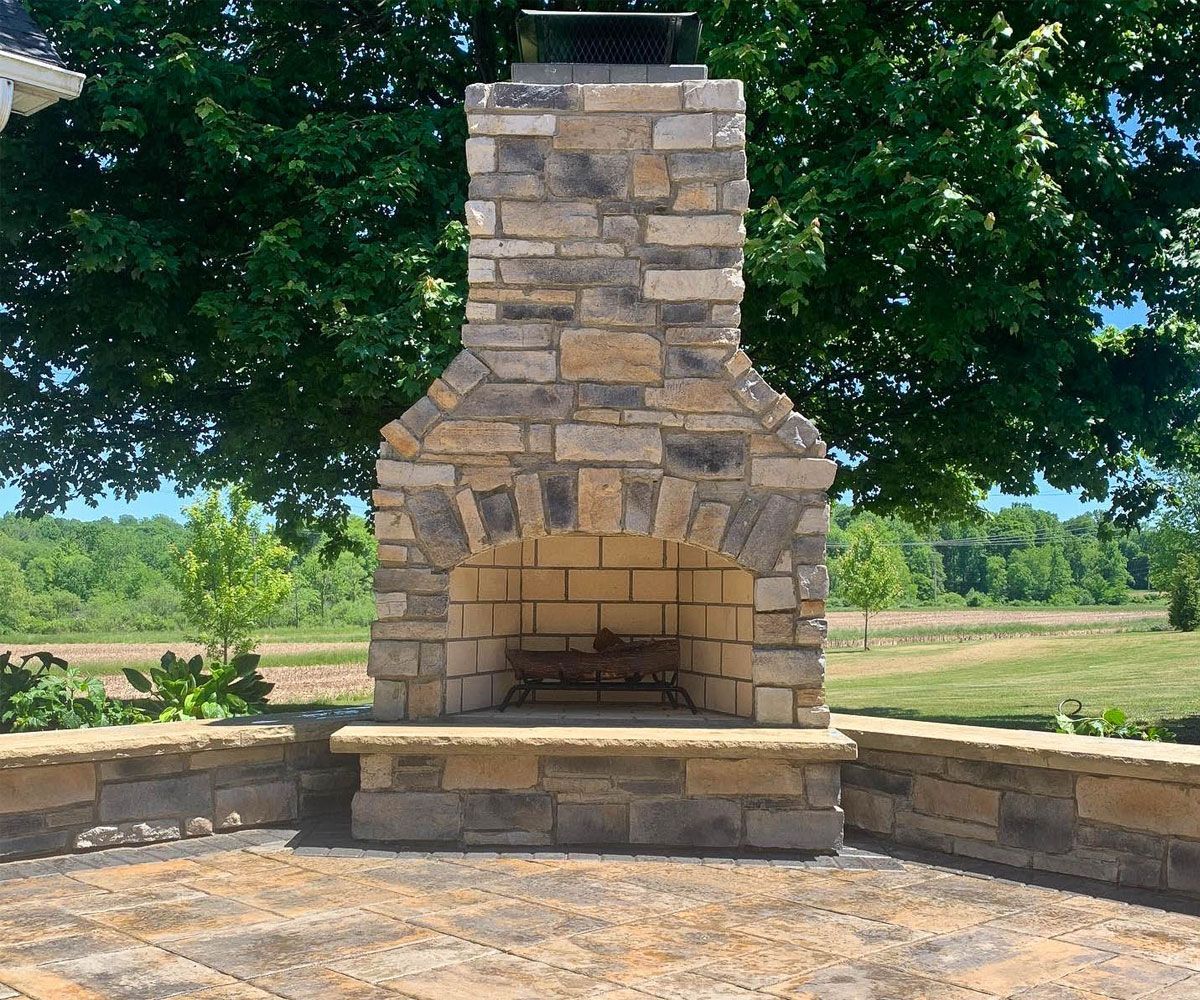
Quick Comparison: Wood-Burning vs. Gas Outdoor Fireplaces
| FEATURE | WOOD-BURNING FIREPLACE | GAS OUTDOOR FIREPLACE |
|---|---|---|
| Ambiance | Crackling sound, authentic aroma, high moving flames | Steady flame, clean modern look, customizable fire media |
| Convenience | Requires gathering wood, building the fire, and ash cleanup | Instant on/off via switch, remote, or key valve |
| Smoke/Odor | Yes; smoke shifts with the wind | No smoke, no ash, no residual odors |
| Best For | Traditionalists who love the site and smell of a campfire | Those seeking luxury, ease of use, and modern design |
The Wood-Burning Outdoor Fireplace: Traditional Ambiance
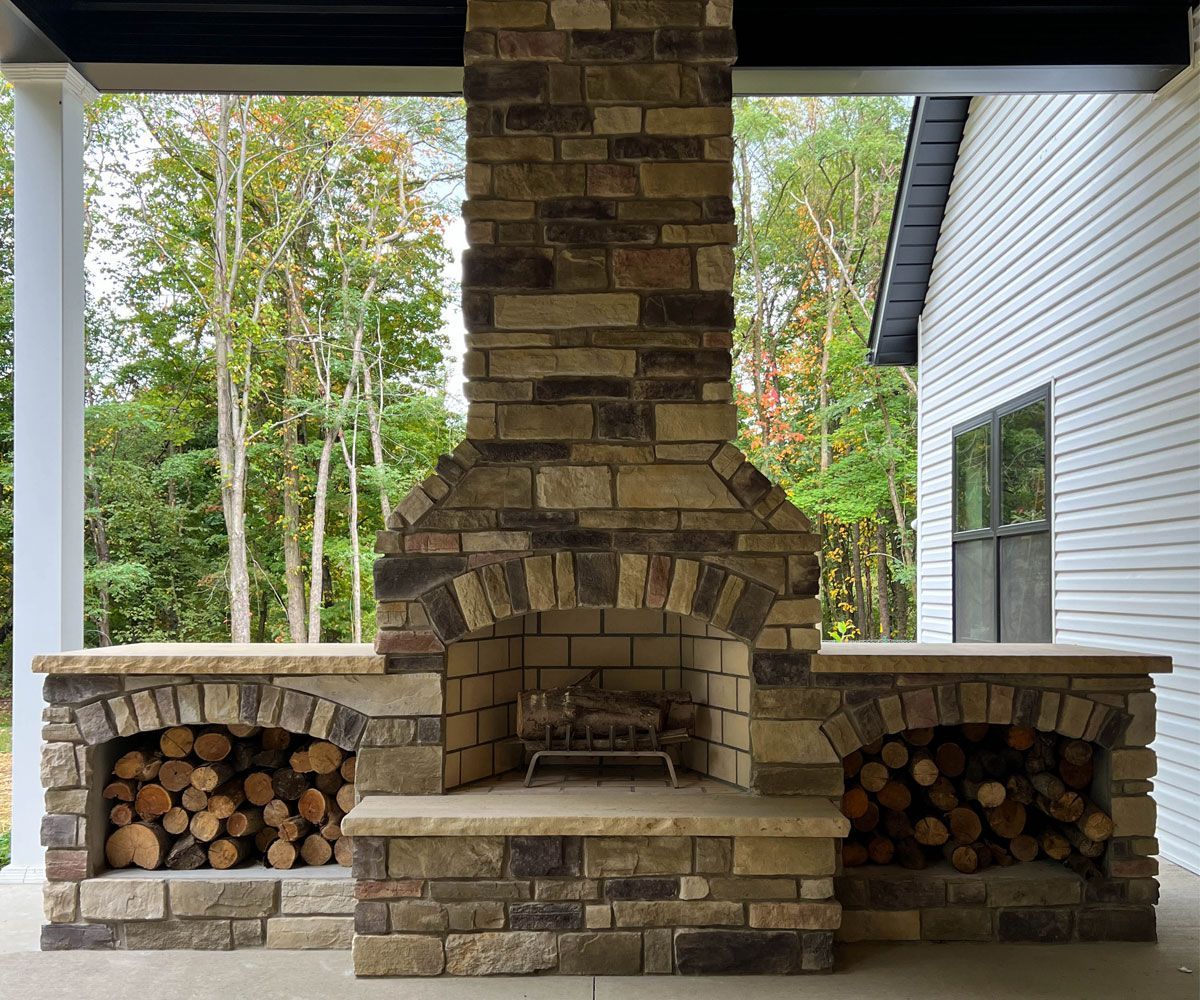
The Benefits
- High-Heat Output: Wood fires burn incredibly hot, making them ideal for chilly Northeast Ohio late autumn and winter nights.
- Superior Visual Impact & Privacy: Wood-burning fireplaces require a tall, structurally sound chimney to draft smoke safely upward. This grand masonry structure creates an impressive focal point and serves as an excellent privacy screen from neighbors.
- No Utility Lines Required: Because it doesn’t rely on a gas hookup, a wood-burning fireplace can be positioned anywhere on your property (provided it meets local safety setbacks).
Cost Differentiators
Building a wood-burning fireplace requires a robust, heavy-duty masonry design with a fully functional chimney and flue to safely draw smoke upward. Because of the substantial structural engineering and materials required to handle extreme thermal stress, the initial construction cost for custom masonry wood-burning units is typically higher than a standard gas kit.
Wood-burning outdoor fireplaces require an active hand. Sparks and flying embers mean you must maintain a safe clearance from overhanging trees, pavilions, and property lines. They also require regular maintenance—including clearing out ash, sourcing and storing dry firewood, and checking the chimney flue for creosote buildup to prevent accidental fires.
• SETBACKS: City and township zoning laws generally dictate that wood-burning structures must be built a minimum distance away from property lines, your main home, and structures like wood pavilions.
• EPA & BURN REGULATIONS: According to the Ohio EPA and the Ohio Department of Natural Resources (ODNR), open burning rules apply. While localized recreational fires inside a approved outdoor fireplace are permitted, you must burn only clean, seasoned firewood—never trash or yard waste.
The Gas Outdoor Fireplace: Clean, Modern Convenience
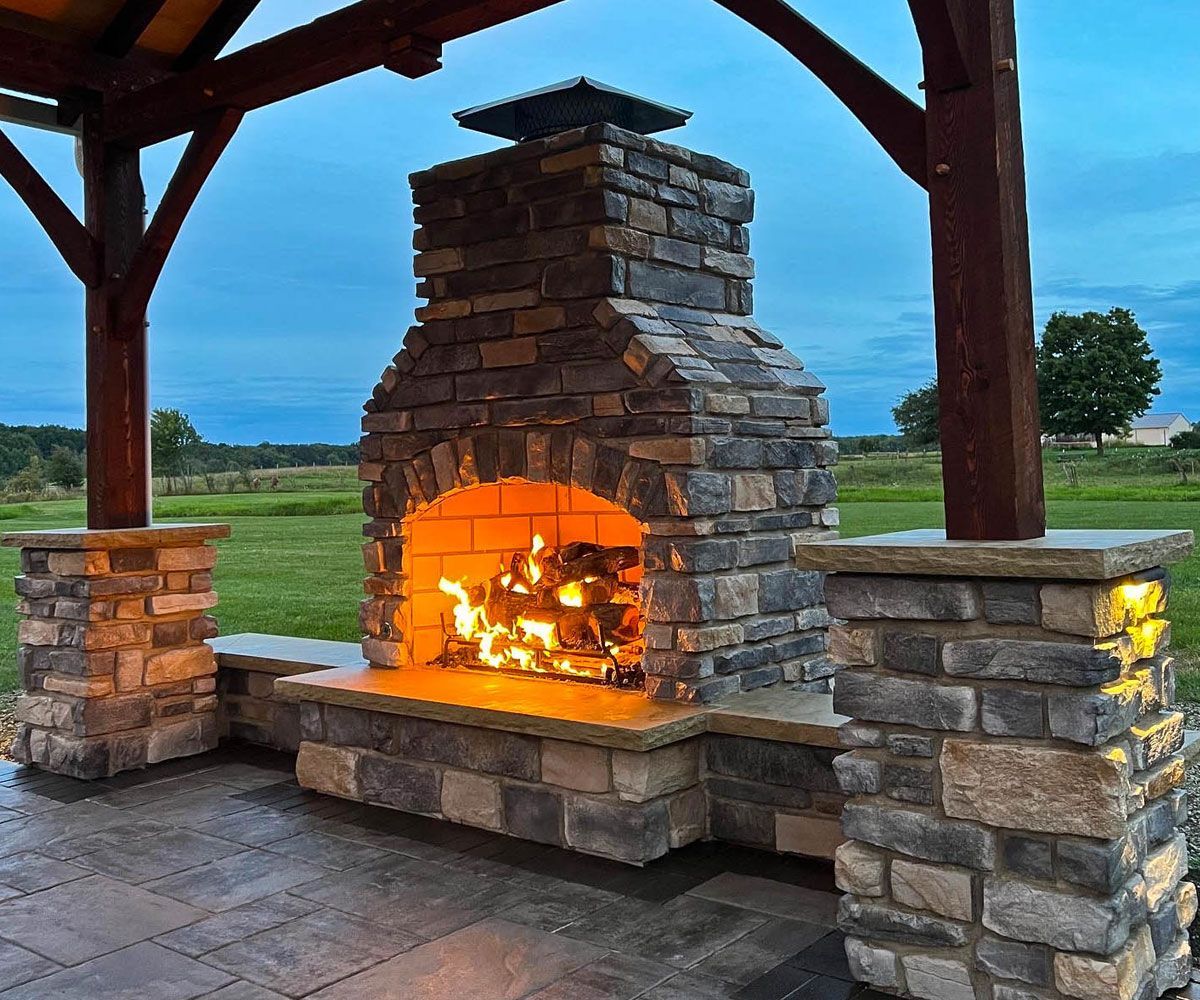
If your ideal evening involves pressing a button and immediately enjoying a glass of wine by the fire, a gas fireplace (powered by natural gas or liquid propane) is your perfect match.
The Benefits
- Instant Gratification: Turn it on or off with a remote, smartphone app, or a simple valve key. There is no waiting for logs to catch fire and no ash to clean up afterward.
- Smoke-Free Comfort: Say goodbye to shifting your seat to avoid blowing smoke. Gas fires burn clean, meaning no smell on your clothes or irritation to your eyes.
- Design Versatility: Gas fireplaces don’t require a tall, traditional chimney to exhaust smoke. This allows for sleek, low-profile linear designs, integrated seating walls, and placement under open-air structures like covered patios.
Gas fireplaces are exceptionally safe because they lack unpredictable sparks or embers. When you are done for the night, you simply turn the valve off—no waiting around for hot coals to die down. However, because they utilize live gas lines, professional installation by a certified expert is mandatory to ensure all connections are completely airtight and pressure-tested.
- Permit Requirements: Most Northeast Ohio building departments strictly require mechanical and electrical permits for running new gas lines. A certified professional must perform a gas line pressure test to guarantee structural safety before it can be signed off.
- Enhanced Safety: Gas fireplaces are incredibly safe for tighter suburban lots. They don’t emit flying sparks or embers, drastically reducing fire hazards near overhanging trees or wood decks.
Upfront Investment vs. Long-Term Value
| COST FACTOR | WOOD-BURNING FIREPLACE | GAS OUTDOOR FIREPLACE |
|---|---|---|
| Initial Construction & Masonry | Higher. Requires a full, heavy masonry chimney, engineered footing, and a refractory brick firebox built to withstand extreme thermal shifts. | Variable. The structure itself can often be lighter (sometimes utilizing a framing kit with stone veneer), but requires specialized gas burner inserts. |
| Utility & Site Prep Costs | Lower. No underground utility trenching is required | Higher Upfront. Requires hiring a licensed professional to trench and run a dedicated natural gas line from home or install an accessible propane tank system. |
| Fuel & Operating Costs | Ongoing cost of purchasing or processing firewood. | Dependent on local natural gas rates or propane refills; generally provides highly cost-efficient hourly operation. |
Design Your Dream Fire Feature With Chidsey Landscape & Design
Whether you want to build a sprawling wood-burning hearth as the centerpiece of a new Unilock paver patio, or integrate a sleek, linear gas fireplace into a comprehensive custom outdoor kitchen design, Chidsey Landscape & Design is here to guide you.
View our gallery of custom outdoor fireplace projects or contact our award-winning team today to schedule your design consultation!